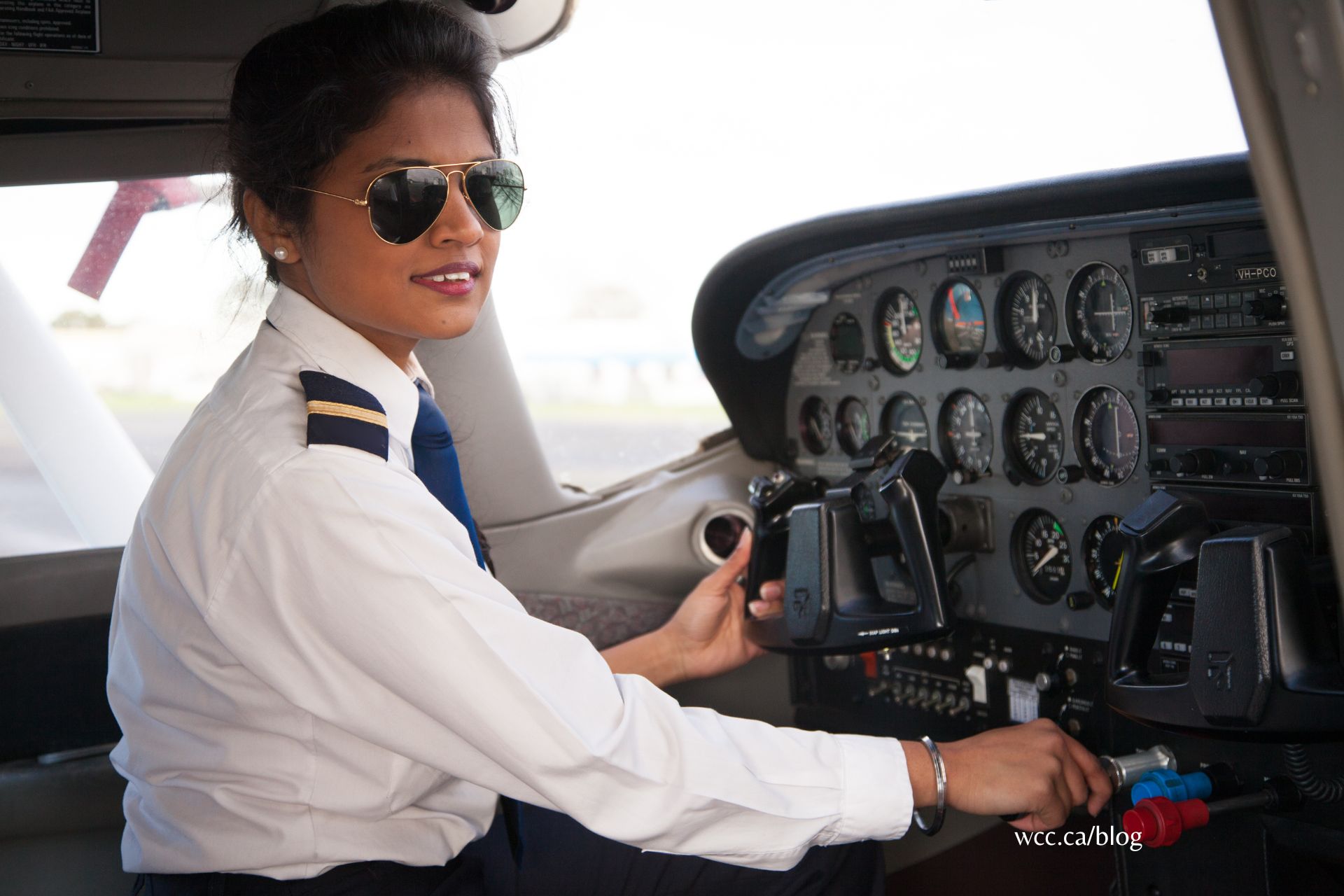
If you’ve ever imagined yourself soaring above British Columbia’s mountains and coastlines, getting your Private Pilot License (PPL) is the first step. With the right training, documentation, and commitment, you can turn that dream into reality.
This guide explains how to get a PPL in British Columbia — from regulatory requirements by Transport Canada to practical steps, costs, training durations, and how PPL fits into a future career like a Commercial Pilot License.
What is a Private Pilot License (PPL)?
A PPL allows you to act as pilot-in-command of private, non-commercial flights, under Visual Flight Rules (VFR). With a PPL, you can carry passengers (non-paying), fly cross-country, explore remote airstrips, and enjoy the freedom of general aviation. Many aspiring pilots begin with a PPL, then add ratings (night, instrument, multi-engine) or continue toward a commercial license if they want to fly for a living.
In BC, a PPL is typically done through local flight schools that comply with Transport Canada regulations. It becomes your foundational license.
Transport Canada Pilot License Requirements (for PPL)
Before training, it’s vital to understand the legal and regulatory requirements imposed by Transport Canada. These set the framework your flight school and you must follow.
Key Requirements
- Age: You must be at least 17 years old to hold a private pilot license. However, you can begin training earlier and even solo (with permission) under certain limits.
- Medical Certificate: You need a valid aviation medical certificate. For PPL, a Category 3 medical is typically acceptable, while Category 1 is required for commercial privileges later.
- Written Exam (PPAER): You must pass the Private Pilot Aeroplane Examinations Regulation (PPAER) written exam administered by a qualified examiner.
- Flight Training Hours: The regulatory minimum is 45 flight hours under Transport Canada, including dual (with instructor) and solo time, cross-country flying, and night or cross-country qualifying components.
- Ground School Hours: Completion of ground school covering subjects like aviation law, navigation, meteorology, aerodynamics, communications, human factors, etc.
- Language Proficiency: Must be capable of effective communication in English (or French) for aviation operations.
- Flight Test: After meeting all training and exam requirements, you must pass a flight test with a Transport Canada–approved examiner.
These rules ensure safety, standardization, and minimum competencies across Canadian aviation.
Medical Requirements for Pilot License
Getting your medical early is one of the smartest steps — it prevents wasted time if you’re ineligible.
- Category 3 Medical is sufficient for a private pilot license. This covers basic vision, hearing, cardiovascular, neurological, and psychological screening.
- If you plan eventually to pursue a commercial license, you may want to opt for a Category 1 Medical from the start — it’s more rigorous but avoids switching later.
- The medical must be conducted by a Civil Aviation Medical Examiner (CAME) approved by Transport Canada.
- Renewals are required periodically (intervals depend on health and age) to maintain currency.
Ground School & Flight Training in BC
Training is divided into two parallel tracks: classroom theory (ground school) and in-air flight training.
Ground School
- Covers core subjects like air law, meteorology, navigation, communications, human factors, aircraft systems, performance, and flight planning.
- Usually delivered in classroom or online format by your flight school.
- Training often includes practice exams, quizzes, and test prep to pass the PPAER written exam.
Flight Training
- Under instructor supervision (dual) and solo flights.
- Includes maneuvers (stall, steep turns), takeoffs/landings, ground reference, emergency procedures, navigation, cross-country flights, and radio use.
- Must log cross-country (i.e. flights away from base) and solo hours to meet licensing criteria.
- Many schools use training aircraft like Cessna 172, Diamond DA20, or similar single-engine trainers.
In BC, many flight schools integrate simulator or procedural training to supplement in-air hours—helpful in poor weather or for procedure practice.
Duration: How Long Does It Take?
The training duration depends heavily on how often you fly, weather, your learning pace, and scheduling availability. Here’s a realistic estimate for BC:
- Minimum regulatory baseline: 45 hours of flight time (Transport Canada requirement)
- Typical student average: 60–80 hours total (many students exceed the minimum)
- Part-time training (weekends / evenings): 6 to 12 months
- Full-time or concentrated training (if able to fly 3–5 times/week): 3 to 4 months
Consistency matters. Gaps in training slow progress, requiring refresher flights. Flying regularly helps retention and reduces extra hours.
Cost of Private Pilot License in Canada / BC
One of the first questions prospective pilots ask: How much will it cost?
Here’s a breakdown of expenses you should budget for (based on BC flight school pricing and student reports):
| Expense | Typical Cost Range (CAD) |
| Ground school + materials | $600 – $2,000 |
| Medical exam | $100 – $300 |
| Dual flight hours (instructor + aircraft) | $8,000 – $15,000 |
| Solo flight hours (aircraft rental) | $4,000 – $8,000 |
| Written exam, flight test, licensing fees | $500 – $1,000 |
| Headset, charts, equipment, miscellaneous | $300 – $1,000 |
| Estimated total | $15,000 – $25,000+ |
In BC, typical totals for many students fall in the $18,000–$25,000 range, depending on how many extra hours are needed beyond minimum. Some schools advertise lower base costs, but always read the fine print (some don’t include test fees, fuel surcharges, insurance, etc).
Aviation Schools in BC — A Few Notable Options
Here are a few recognized flight training schools in BC. (Always verify current pricing, fleet, instructor quality, and regulatory compliance.)
- Victoria Flying Club (Victoria, BC) — One of BC’s oldest and well-regarded clubs offering PPL, CPL and advanced ratings.
- Classic Aviation — training in the lower mainland, with flexible PPL options.
- Alkan Air / Stonebridge Aviation — offering flight training and charter services in northern BC.
- Southern Interior Flight Centre — serves the interior BC region, offering PPL training with good weather windows.
When comparing, ask about:
- Fleet age, maintenance, and availability
- Instructor experience and student retention
- Transparent cost breakdown
- Simulator access
- Scheduling flexibility
- Weather impacts and downtime
- Student outcome rates (how many complete)
Step-by-Step Path: From Zero to PPL
- Book a discovery flight to confirm you enjoy flying.
- Obtain a medical certificate (Category 3 or 1).
- Enroll in a flight school and start ground school immediately.
- Begin flight lessons under instructor supervision.
- Study and pass the PPAER written exam.
- Log required flight hours (dual, solo, cross-country).
- Complete pre-test preparation (briefings, mock flights).
- Sit the flight test with an approved examiner.
- Receive your PPL licence and celebrate—then you can fly as pilot-in-command of private aircraft!
After PPL, if desired, continue adding ratings (night, instrument, multi-engine) or go toward Commercial Pilot License (CPL) training.
Commercial Pilot License after PPL
If you plan to fly professionally, PPL is just the start:
- You’ll need more flight hours (often 200+ in Canada for CPL)
- Earn additional ratings like instrument flying, multi-engine, commercial theory exams
- Hold a Category 1 medical
- Pass commercial written exams and flight test
- Many schools offer combined PPL → CPL integrated programs
Thus, choose a flight school that supports or “funnels” students from PPL through to CPL so your training is streamlined.
Challenges and Tips for Success
Challenges to watch for:
- Unfavorable weather (BC’s coastal climate can limit VFR days)
- Scheduling and aircraft availability
- Cost escalation from extra required hours
- Medical surprises
- Gaps in training (forgetting maneuvers)
Tips for success:
- Train consistently (multiple lessons per week if possible)
- Master theory before flight sessions
- Use simulators for procedural practice
- Ask about package pricing or hour-block discounts
- Talk to current students or alumni for insights
- Budget cushion above minimum cost
- Stay physically healthy and well-rested for medical and training demands
BC Flight Schools Comparison Table
| Flight School | Location / Base | Sample PPL Costs & Rate Structure | Fleet / Training Assets | Notes & Unique Features |
| Victoria Flying Club (VFC) | Sidney / Vancouver Island | Estimated cost: CAD 20,210 based on 40h dual + 15h solo + ground school & fees flyvfc.com | Cessna 172s (single engine), simulators, instructors, membership club structure Pilot Career Center+1 | Ground school ~8 weeks; support for international students; aviation program partnership with UVic flyvfc.com+2flyvfc.com+2 |
| Classic Aviation | Pitt Meadows (Lower Mainland) | “Minimum cost” listing: ~$13,275 for 45h flight + ground, with breakdowns: dual, solo, simulator, briefings classicaviation.ca | Fixed-wing single engine aircraft, simulator time allowed, structured syllabus classicaviation.ca+1 | Transparent breakdown; uses airline-style training methods; close access to Vancouver area BestAviation.net+1 |
| Pacific Rim Aviation Academy | BC | Dual flight (25 hrs) + solo (20 hrs) + simulator & ground rates: total ~ CAD $18,700.82 for domestic program Pacific Rim Aviation Academy | Training aircraft plus simulator (for procedural training) Pacific Rim Aviation Academy | Offers published rate structure; good transparency in cost components Pacific Rim Aviation Academy |
| Adventure Aviation | BC | PPL advertised cost ~ CAD 19,510 (33 hrs dual + 12 hrs solo + ground school, briefings, test fees) Adventure Aviation | Single engine Cessna 172s; instrument and multi ratings available too Adventure Aviation | Clear rate schedule with extras listed; good option especially if you’re in that region Adventure Aviation |
Final Thoughts
Earning your Private Pilot License in British Columbia is a demanding but achievable journey. With Transport Canada’s regulatory framework, flight training opportunities, and a realistic budget and timeline, you can move from ground school to cockpit.
The PPL opens doors—whether you fly for fun, fly to remote places, or continue toward a commercial pilot career. Choose your flight school wisely, train regularly, stay safe, and enjoy the view from above.
Frequently Asked Questions
- How long does it take to get a Private Pilot License in BC?
It typically takes 3–6 months for full-time students and up to 12 months for part-time learners. While Transport Canada requires a minimum of 45 flight hours, most students log 60–80 hours before completing the test. - How much does a Private Pilot License cost in British Columbia?
The cost of a PPL in BC usually ranges between CAD $18,000 and $25,000, depending on the flight school, aircraft type, instructor rates, and additional training hours required beyond the 45-hour minimum. - What are the medical requirements for a Private Pilot License in Canada?
You must pass a Category 3 aviation medical exam conducted by a Transport Canada–approved Civil Aviation Medical Examiner (CAME). If you plan to continue toward a commercial license, consider taking a Category 1 medical from the start. - Can I train for my PPL while working or studying full-time?
Yes, many aviation schools in BC offer flexible schedules, evening or weekend classes, and part-time flight training options. Consistency is key — flying regularly helps you progress faster and save costs. - What can I do after getting my Private Pilot License?
After earning your PPL, you can fly non-commercial flights, carry passengers, and explore Canada’s airspace. Many pilots continue to pursue advanced ratings (Night, Instrument, Multi-engine) or progress to a Commercial Pilot License (CPL) to fly professionally.