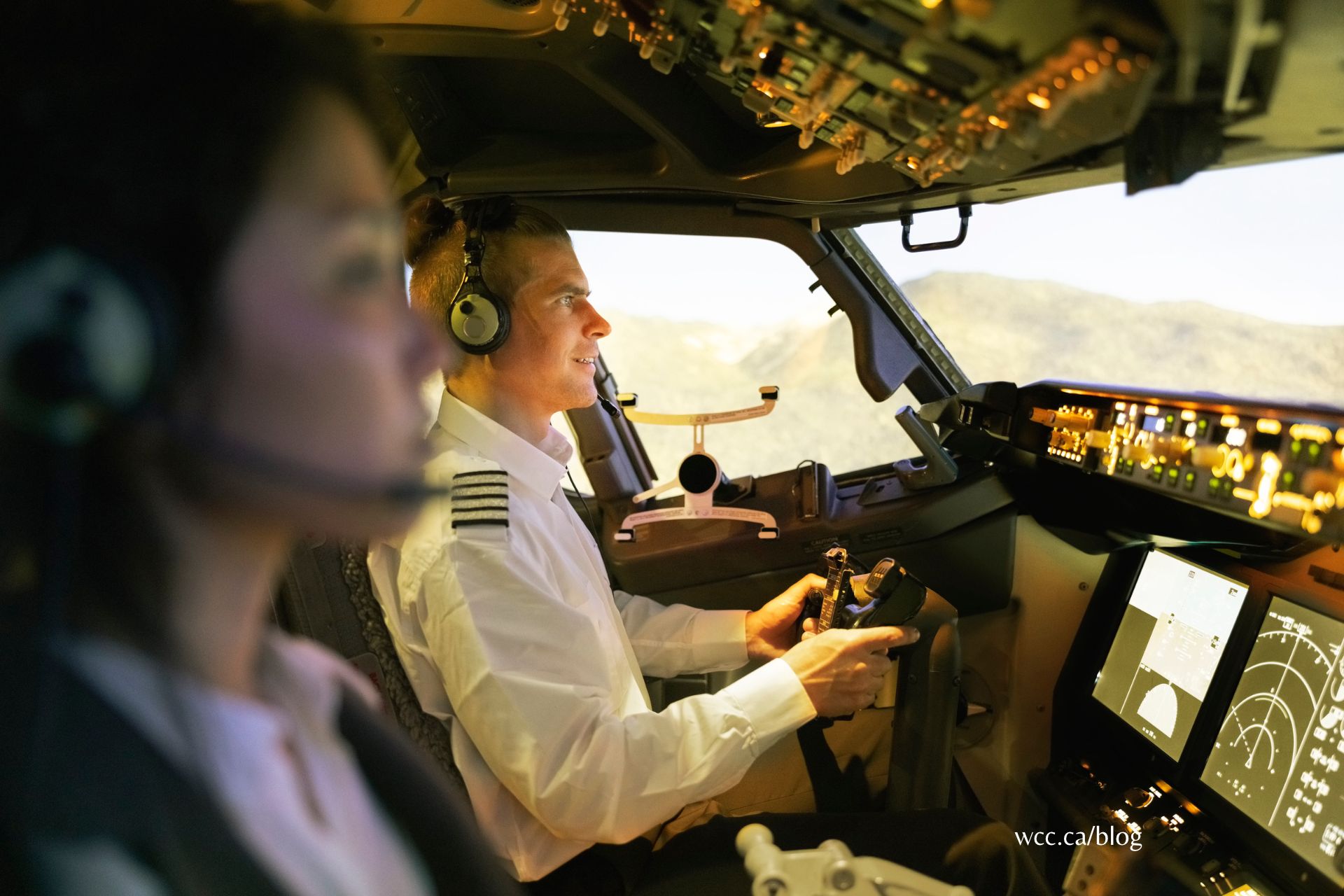
To become a pilot in Canada, you complete a 5-stage licence progression governed by Transport Canada, from a Student Pilot Permit through to the Air Transport Pilot Licence (ATPL).
The full journey from zero flight experience to an airline cockpit takes 4 to 6 years, requires a minimum of 1,500 flight hours for ATPL eligibility, and costs between CAD $60,000 and $100,000 in total training investment.
Canada currently faces an acute pilot shortage in 2026. Major carriers Air Canada, WestJet, and Air Transat are actively recruiting. That makes this one of the strongest hiring markets for new pilots in decades.
What Does Becoming a Pilot in Canada Require?
Becoming a pilot in Canada requires 4 things: a valid aviation medical certificate, successful completion of Transport Canada written exams, the prescribed flight hours at each licence stage, and a passed flight test with a Transport Canada–approved examiner.
Transport Canada oversees all pilot licensing and training in Canada under the Canadian Aviation Regulations (CARs). Every Flight Training Unit (FTU) in Canada holds a Transport Canada approval and undergoes regular audits covering aircraft maintenance, training facilities, and administrative quality.
The minimum age requirement is 17 years old to hold a Private Pilot Licence (PPL). You can begin flight training earlier and solo an aircraft before age 17 with an instructor’s sign-off and a Student Pilot Permit.
Medical certification comes in 3 categories. Category 3 covers PPL privileges. Category 1 is required for commercial flying. A Civil Aviation Medical Examiner (CAME), a physician certified by Transport Canada, conducts all pilot medical exams. Scheduling your Category 1 medical early saves you time if any health conditions need assessment.
How to Become a Pilot in Canada: The 5-Stage Licence Progression
The Canadian pilot licence system follows a fixed sequence. You cannot skip stages, each licence provides the legal foundation and minimum hours for the next.
Stage 1: Earn Your Student Pilot Permit
To earn a Student Pilot Permit, you pass a Category 3 medical exam, complete an aeronautical knowledge test, and receive sign-off from a certified flight instructor.
The Student Pilot Permit allows you to fly solo, without an instructor aboard, under supervision and within the conditions set by your school. You apply for the permit through Transport Canada. Most FTUs submit the application on your behalf as part of their enrolment process.
Stage 2: Complete the Private Pilot Licence (PPL)
To complete the Private Pilot Licence (PPL), you log a minimum of 45 total flight hours, pass the PPAER (Private Pilot Aeroplane Examinations Regulation) written exam, and pass a flight test with a Transport Canada examiner.
The 45-hour minimum includes: 17 hours of dual instruction with an instructor (including 3 hours of cross-country and 5 hours of instrument training), and 12 hours of solo flight (including 5 hours of cross-country).
Most students log 55 to 65 hours before reaching PPL standard. WCC’s BC pilot training guide explains Transport Canada’s specific requirements for each training component in British Columbia.
The PPL allows you to fly as Pilot-in-Command on day Visual Flight Rules (VFR) flights in aircraft up to 12,500 lbs (5,670 kg), carrying passengers at no charge. A PPL is valid worldwide.
Stage 3: Progress to the Commercial Pilot Licence (CPL)
To progress to the Commercial Pilot Licence (CPL), you accumulate 200 total flight hours, pass the CPAER (Commercial Pilot Aeroplane Examinations Regulation) written exam, and pass a CPL flight test.
The 200-hour total includes: 100 hours as Pilot-in-Command, 20 hours of cross-country Pilot-in-Command time, and 5 hours of night flying.
The CPL is the minimum licence to fly for compensation in Canada. Without a CPL, you cannot legally receive payment for any piloting work. Explore WCC’s WCC aviation programs to see how the PPL feeds directly into CPL training at WCC’s Transport Canada-approved FTU in Abbotsford, British Columbia.
Stage 4: Add Ratings , Instrument, Multi-Engine, and Night
To become employable as a professional pilot in Canada, you add 3 ratings to your CPL: an Instrument Rating (IR), a Multi-Engine Rating (MER), and a Night Rating.
The Instrument Rating (IR) allows you to fly under Instrument Flight Rules (IFR), in clouds and low visibility, using cockpit instruments rather than ground reference. Airlines require an IR on every pilot. The IR written exam covers meteorology, navigation, aerodynamics, and instrument systems.
The Multi-Engine Rating (MER) permits you to fly aircraft with more than 1 engine. Airlines including Air Canada, WestJet, and regional carriers like Jazz Aviation operate twin-engine jets that require the MER.
The Night Rating qualifies you to conduct flights after official sunset. Night training requires at least 10 hours of night flight, including 5 hours as Pilot-in-Command.
Stage 5: Qualify for the Air Transport Pilot Licence (ATPL)
To qualify for the Air Transport Pilot Licence (ATPL), you accumulate 1,500 total flight hours, pass 7 ATPL written examinations, and pass an ATPL flight test.
The 1,500-hour minimum includes: 250 hours as Pilot-in-Command, 200 hours of cross-country time, 100 hours of night flight, and 75 hours of instrument time.
The ATPL is required to serve as Captain on any commercial air service in Canada. Many regional carriers hire First Officers with 1,000 to 1,200 hours under current 2026 pilot shortage conditions.
Quick-Reference Table: Canadian Pilot Licence Requirements at Each Stage
The table below shows each licence stage, its minimum flight hours, key exams, estimated cost, and training duration.
| Licence / Stage | Min. Flight Hours | Key Exam | Estimated Cost (CAD) | Duration |
| Student Pilot Permit | 0 | Aeronautical Knowledge Test | $0–$200 (exam fee) | 1–2 weeks |
| Private Pilot Licence | 45 hrs total | PPAER written exam + flight test | $18,000–$25,000 | 3–12 months |
| Commercial Pilot Licence | 200 hrs total | CPAER written exam + flight test | $15,000–$25,000 | 6–18 months |
| Instrument Rating | 50 hrs IFR | INRAT written exam + flight test | $8,000–$15,000 | 2–6 months |
| Multi-Engine Rating | N/A (dual) | Flight test only | $3,000–$6,000 | 1–3 weeks |
| Night Rating | 10 hrs night | No written exam , flight test only | $1,500–$3,000 | 1–3 weeks |
| Air Transport Pilot Licence | 1,500 hrs total | 7 ATPL written exams + ATPL flight test | Hour-building cost varies | 4–8 years total |
How Much Does Pilot Training in Canada Cost in 2026?
Pilot training in Canada costs between CAD $60,000 and $100,000 in total from zero hours to an ATPL-ready CPL with IR, MER, and Night Rating.
The PPL alone costs CAD $18,000 to $25,000 at a typical Canadian FTU using a Cessna 172. The CPL adds CAD $15,000 to $25,000. Adding the Instrument Rating costs CAD $8,000 to $15,000. The Multi-Engine Rating runs CAD $3,000 to $6,000.
Hour-building, accumulating the 1,500 hours needed for ATPL, adds variable costs. Pilots who build hours by working as flight instructors earn an income while logging hours. Pilots who pay for charter or time-building flights spend CAD $150 to $250 per flight hour.
4 funding sources reduce training costs for Canadian pilot students:
- Provincial grants: British Columbia, Alberta, and Ontario each offer targeted aviation workforce funding programs. Check WorkBC.ca and your provincial labour market authority for current programs.
- Student loans: Transport Canada-approved FTUs qualify for government student loans through the National Student Loans Service Centre (NSLSC).
- Airline cadet programs: Air Canada and WestJet run competitive cadet programs that provide mentorship, preferential hiring, and partial training support for selected students.
- Scholarship programs: Organizations including the Canadian Owners and Pilots Association (COPA), Women in Aviation International (WAI), and the Air Cadet League of Canada offer annual flight training scholarships ranging from $500 to $5,000.
WCC offers installment-based tuition and flexible scheduling, full-time, part-time, and weekend options, at its Abbotsford aviation campus. Review the commercial pilot diploma program page for current tuition and fuel surcharge rates.
How to Build Flight Hours After Your CPL
After earning your CPL, you need to build flight hours toward the 1,500-hour ATPL minimum. 3 main hour-building paths exist for Canadian pilots.
- Flight instructing: the most common path in Canada. You earn a Flight Instructor Rating (FI) by completing a Flight Instructor Course at an FTU, then teach student pilots. Instructors log 500 to 800 hours per year at active FTUs.
- Northern and remote charter flying: operators including Air Tindi, Wasaya Airways, and Bearskin Airlines hire CPL holders with 200 to 300 hours for cargo and passenger flights in northern Ontario, Manitoba, and the Northwest Territories. Hours accumulate quickly on multi-sector days.
- Regional airline First Officer: regional carriers such as Jazz Aviation, Pacific Coastal, and Central Mountain Air hire First Officers starting from 1,000 hours under current 2026 pilot shortage conditions. These positions pay CAD $40,000 to $70,000 per year and count toward the ATPL minimum.
Pilots typically spend 2 to 4 years building hours between CPL and the 1,500-hour ATPL threshold. The most efficient hour-builders complete an FI rating immediately after CPL and instruct full-time for 18 to 24 months before applying to regional carriers.
What Is the Pilot Shortage in Canada in 2026?
Canada faces a structural pilot shortage in 2026 driven by 2 simultaneous forces: mandatory retirement of captains at age 65, and reduced pilot training during the 2020–2022 pandemic period.
The number of commercial pilot licences issued in Canada fell by 80% between 2019 and 2022. The aviation industry has not fully recovered the training pipeline.
Air Canada, WestJet, Air Transat, and regional carriers are all running active pilot recruitment in 2026. Jazz Aviation, Air Canada’s regional partner, has posted rolling First Officer vacancies throughout 2025 and 2026.
The pilot shortage affects 2 groups of applicants positively: candidates with CPLs and 1,000+ hours receive job offers from regional airlines that historically required 1,500 hours, and new ATPL holders gain direct access to narrow-body jet positions at major carriers faster than in pre-shortage hiring cycles.
Boeing’s 2024 Pilot Outlook Report projected a need for 15,700 new pilots in Canada and the United States combined between 2024 and 2043. Canada accounts for approximately 12% of that demand based on fleet size.
How International Students Can Become Pilots in Canada
International students can complete pilot training in Canada and pursue a professional pilot career here. The Canadian government actively encourages foreign students to train and remain in Canada as flight instructors or commercial pilots.
4 steps apply specifically to international students:
- Student permit: you need a valid Canadian study permit to enrol in a Transport Canada-approved FTU aviation diploma program. Programs at approved institutions qualify for study permits.
- Medical eligibility: complete a Category 1 medical exam with a Transport Canada-approved CAME before committing to a full CPL program. International health conditions may affect eligibility, and knowing your status early prevents costly training starts that cannot be completed.
- PGWP eligibility: graduates of eligible aviation diploma programs at designated learning institutions qualify for a Post-Graduate Work Permit (PGWP). A PGWP allows you to work in Canada as a flight instructor or pilot after graduation, building hours toward permanent residency.
- Language proficiency: Transport Canada requires English language proficiency for all pilot licences. ICAO Language Proficiency Level 4 is the minimum for instrument flying. Most FTUs require proof of English proficiency at enrolment.
WCC’s aviation programs at the Abbotsford campus accept international students and qualify for PGWP. Browse the full range of WCC aviation programs to compare PPL, CPL, and Flight Instructor options with current international student admission requirements.
Frequently Asked Questions About How to Become a Pilot in Canada
Do you need a university degree to become a pilot in Canada?
No. Transport Canada does not require a university degree for any civilian pilot licence. Completion of secondary school (Grade 12) suffices for PPL eligibility. A university or college degree is only required for the military pilot pathway through the Royal Canadian Air Force (RCAF).
How long does it take to become a commercial airline pilot in Canada?
4 to 8 years, depending on hour-building speed. The PPL takes 3 to 12 months. Building from PPL to a CPL with ratings takes 1 to 2 more years. Accumulating 1,500 hours for ATPL eligibility takes 2 to 4 additional years. Pilots instructing full-time reach ATPL minimums faster than those flying part-time or self-funding hour building.
Can a foreign pilot licence be converted to a Canadian one?
Yes. Transport Canada accepts foreign pilot licences for credit toward Canadian licences. The conversion process requires a competency evaluation, additional written exams on Canadian Aviation Regulations (CARs), and may require additional flight testing. Pilots from ICAO member states, including the United States, United Kingdom, and Australia, receive the most streamlined conversion process.
What medical conditions disqualify you from becoming a pilot in Canada?
Conditions that Transport Canada automatically disqualifies for Category 1 medical include uncontrolled diabetes, active psychosis, epilepsy, and uncorrected distant visual acuity below 6/60 (20/200). Many other conditions, including corrected vision, well-managed hypertension, and colour vision deficiencies, require assessment but do not automatically disqualify. A CAME provides a definitive eligibility assessment before you begin training.
Is flying a Cessna 172 sufficient for pilot training in Canada?
Yes. The Cessna 172 is the most commonly used training aircraft in Canada and meets all Transport Canada requirements for PPL and CPL flight training. Thousands of Canadian pilots have completed their PPL and CPL in a Cessna 172 before transitioning to multi-engine aircraft for their MER and airline type ratings. WCC’s FTU in Abbotsford uses Cessna 172s for primary flight training.
Take Your First Step Toward a Pilot Career in Canada
Becoming a pilot in Canada follows a defined progression: Student Permit, PPL, CPL, ratings, and ATPL. Each stage builds on the last. The full path from zero hours to airline cockpit takes 4 to 8 years and a total investment of CAD $60,000 to $100,000.
The 2026 pilot shortage means qualified candidates reach regional airline cockpits faster than any point in the past 20 years. Carriers including Jazz Aviation, Pacific Coastal, and WestJet hire First Officers at 1,000 hours, a threshold reachable within 2 to 3 years of CPL completion.
WCC’s Transport Canada-approved FTU in Abbotsford delivers PPL and CPL training on Cessna 172 aircraft with certified instructors, flexible schedules, and installment-based tuition. International students qualify for PGWP. Review the full commercial pilot diploma curriculum, costs, and admission requirements, then contact an admissions advisor to book a consultation and start your pilot training in Canada.